NEW! Lung Cancer: Know Your Options Infographic
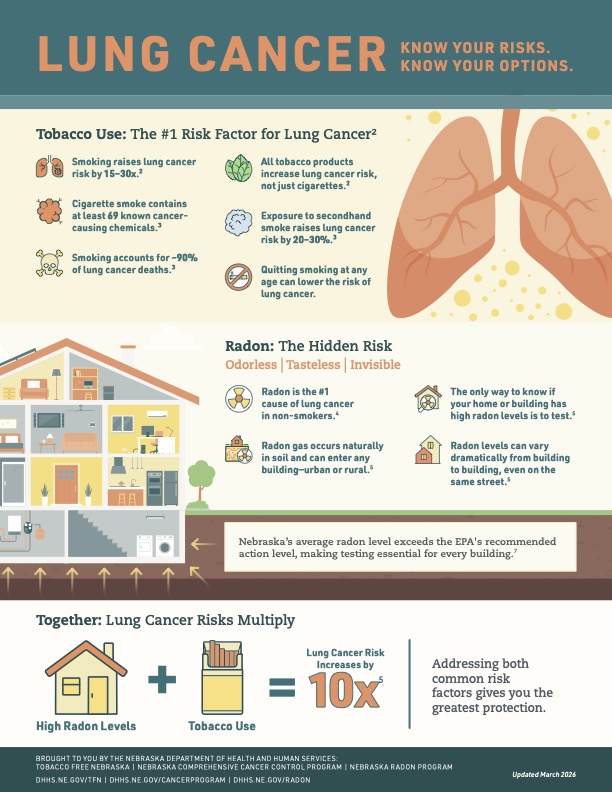
Tobacco Free Nebraska, the Nebraska Comprehensive Cancer Control Program, and Nebraska’s Radon Program have collaborated to develop a new infographic titled “Lung Cancer: Know Your Risks. Know Your Options.” This two-page infographic shows Nebraskans’ top risks for developing lung cancer, which are tobacco and radon, and presents options to help reduce the risk of lung cancer, and resources to pursue lung cancer screening.
"Outsmart Nicotine" - Truth Initiative Launches New Campaign to Include Nicotine Pouches
On April 8, 2026, Truth Initiative launched a new national campaign drawing attention to the troubling rise in young people using multiple tobacco and nicotine products at the same time, including e‑cigarettes, cigarettes, and, for the first time, oral nicotine pouches such as Zyn. The campaign underscores how these products are often used together, increasing risks for addiction and harm, and highlights the growing normalization and appeal of nicotine pouches among youth and young adults.
The national Outsmart Nicotine campaign confronts changing patterns of nicotine use among young people head-on and connects them to free quitting support through EX Program, Truth’s free, evidence-based program.
The expansion of the Outsmart Nicotine campaign introduces three new ads — “Drive Thru,” “Study Sesh,” and “Crush” — that showcase how nicotine use can become a cycle of addiction that is tied to everyday stressors like school, work, social life, and family pressures.
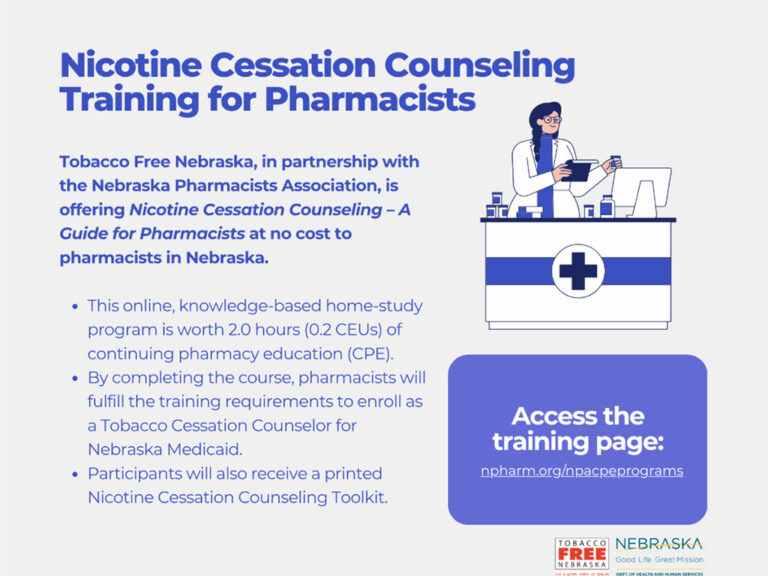
Nicotine Cessation Counseling Training for Pharmacists
Public Health Law Center: Updates to Two Policy Maps
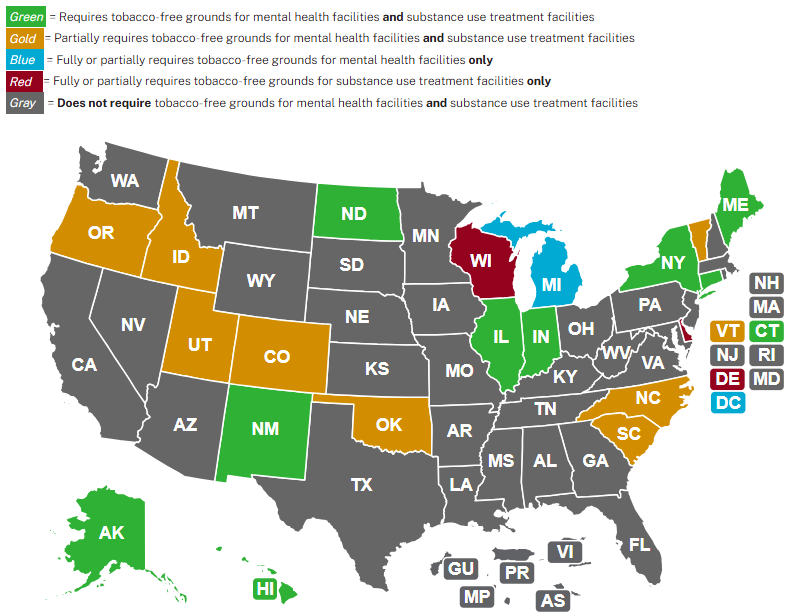
The Public Health Law Center updated two 50-state policy maps that provide an overview of laws that require:
- Tobacco-free grounds – This map and chart provide an overview of U.S. state laws requiring tobacco-free grounds for mental health and substance use disorder programs.
- Tobacco dependency treatment in state mental health and substance use facilities – This map and chart provide an overview of U.S. state laws requiring mental health and substance use disorder treatment facilities to include tobacco dependency treatment in their clinical practice.
Urban-rural differences in oral nicotine pouch sales and flavors in the United States
An International Journal of Drug Policy analysis, which linked NielsenIQ retail sales data with the National Center for Health Statistics county-level urban/rural classifications, highlighted that in 2021, 88% of total oral nicotine pouch sales occurred in urban areas, compared with 12% in rural areas. Oral nicotine pouch sales per 1000 population were also 16% higher in rural than urban areas.
Disability Network for Tobacco Control and Cancer Prevention Webinar Series Opportunity
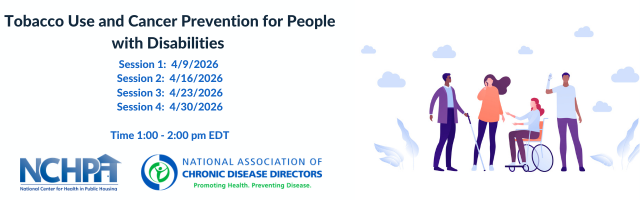
The Disability Network for Tobacco Control and Cancer Prevention, in partnership with the National Center for Health in Public Housing, invites health center staff to participate in a webinar series focused on advancing tobacco prevention and cessation among people with disabilities living in public and assisted housing. Please find additional information below.
Participants will gain practical skills to identify and collaborate with disability-led organizations, adapt cessation programs for accessibility, and build sustainable, comprehensive partnerships that promote healthier communities.
Learning Objectives:
- Improve knowledge about the intersection of disability, tobacco use, and public housing
- Identify and collaborate with disability education and service organizations
- Apply clinical and programmatic strategies to make cessation and prevention programs accessible to people with disabilities
- Establish systems for monitoring and sustaining partnerships
Remaining Schedule:
4/16/2026 12:00 PM CT: Partnering with Disability-Led Organizations
4/23/2026 12:00 PM CT: Implementing Tobacco Cessation and Cancer Prevention
4/30/2026 12:00 PM CT: Sustainability, Evaluation and Continuous Improvement
Health E-Stat 115: Cigarette and Electronic Cigarette Use Among Adults by Urbanization Level: United States, 2024
Cigarette smoking is the leading preventable contributor to disease and death in the United States, and, along with secondhand smoke exposure, causes various cancers and diseases. Electronic cigarette (or e-cigarette) use has been attributed to several respiratory, neurological, and cardiovascular effects. Although cigarette use has decreased among U.S. adults, e-cigarette use has increased. Previous research has shown that the prevalence of cigarette smoking is higher in rural areas compared with urban areas, but less data on e-cigarette use by urbanization level are available.
This publication on cigarette and e-cigarette use from the CDC’s National Center for Health Statistics reports the percentage of U.S. adults age 18 and older who used cigarettes or e-cigarettes by urbanization level.
Tobacco Prevention and Control Partner Successes & Updates
- In March, the Metro Omaha Tobacco Action Coalition (MOTAC) worked with the Douglas County Board of Health to pass a resolution in support of a city-wide policy to make Omaha city parks tobacco-free, as it “benefits the parks safety and appearance as well as the wellbeing of all residents.”
- Tobacco Education & Advocacy Coalition for Hall County (TEACH) and the Hall County Youth Advisory Board – Youth Voices United group hosted an informational table at Grand Island Senior High with tobacco cessation resources. Students and teachers also signed a banner in support of the Take Down Tobacco National Day of Action on March 31.
Do you have a success or update to share with the Nebraska tobacco prevention and control community? Fill out this form for a chance to be featured in the next newsletter.
FDA Updates
- On March 11, 2026, FDA issued a draft guidance on the agency’s current thinking on assessing the risk to youth, and the added benefit to adults needed to outweigh that risk, when reviewing applications for flavored e-cigarettes.
- In September 2025, FDA accepted Achieve Life Sciences’ new drug application (NDA) for cytisinicline, with a target action date of June 20, 2026, which will determine whether the medication is approved for smoking cessation. This would be the first new FDA-approved pharmacotherapy for smoking cessation in nearly 20 years.
🌟 Resource of the Month 🌟
Who is Using the Nebraska Tobacco Quitline?
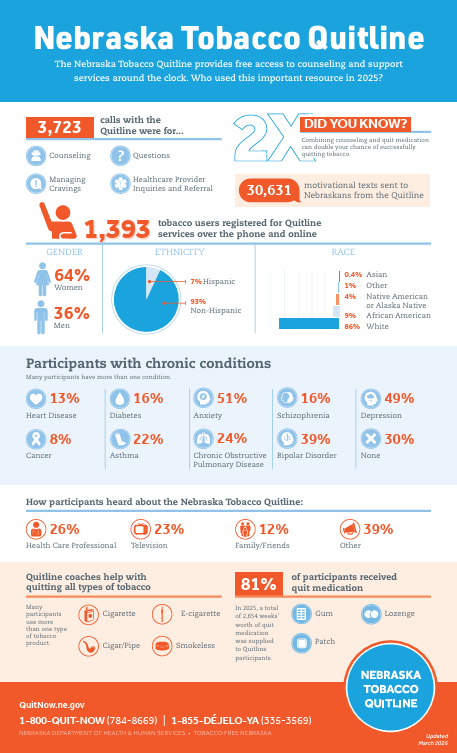
April’s resource of the month is the Who is Using the Nebraska Tobacco Quitline infographic, which breaks down who is using the Nebraska Tobacco Quitline by demographics, those with chronic illnesses and behavioral health conditions, and displays stats from the Quitline. Download and view this infographic here.
Check out Tobacco Free Nebraska’s other cessation resources at the Nebraska Tobacco Quitline Order Form.

Shawn W.
Fourteen-year-old Shawn was only trying to make friends and fit in at a new school when he started taking cigarettes from his father. Shawn became addicted to cigarettes and smoked both regular and menthol cigarettes over the next 30 years. Every cigarette he smoked took a toll on his body, as he learned later in life.
Shawn was in his mid-40s when a chronic cough and laryngitis turned out to be throat cancer. He endured 38 radiation treatments and hours at the doctor’s office and finally quit smoking—but doctors were unable to save his larynx. He now has a stoma (opening) that allows him to breathe and a laryngeal implant that allows him to speak.
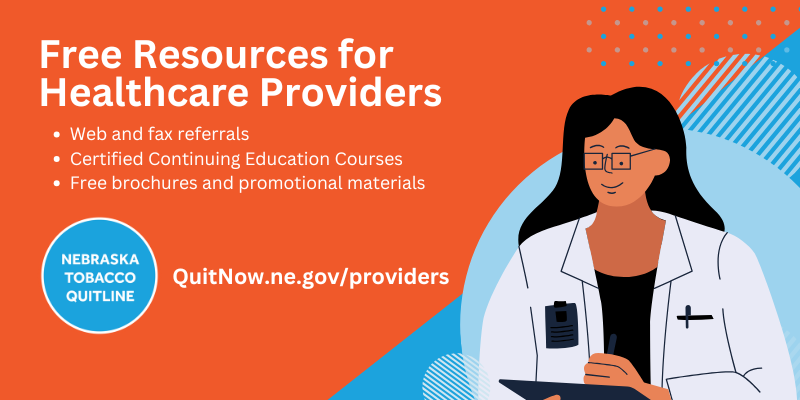
Providers can refer patients using the online web referral option or the updated fax referral form. Visit QuitNow.ne.gov/providers to access tools, resources, and education modules, plus the web and fax referrals for providers ready to help patients quit.

Tobacco Cessation and Behavioral Health Workgroup
April 20, 2026 | 1:30 – 2:30 p.m. CT
At this Tobacco Cessation and Behavioral Health Workgroup Meeting, participants will discuss the Nebraska Behavioral Health Facility and Tobacco-Free Policy Survey Report 2024 in greater detail to better understand how to implement real-world changes based on the insights gained.
Quit Tobacco Week Workgroup
April 29, 2026 | 10:30 – 11:30 a.m. CT
Quit Tobacco Week will be held November 15-21, 2026. It will culminate on Thursday, November 19, for the Great American Smokeout. The goals of Quit Tobacco Week are to encourage community support, raise awareness of the importance of quitting tobacco, and celebrate and support Nebraskans on their quitting journeys. Healthcare providers, businesses, and community partners are encouraged to host cessation events and initiatives. This workgroup will help support Quit Tobacco Week by creating a space for partners to connect and share ideas, identifying opportunities for collaboration, developing communication tools, and more to promote tobacco cessation in Nebraska.
WEBINAR: Behavioral Health and Tobacco Product Use: Addressing Disparities, Improving Outcomes
May 5, 2026 | 12:00 – 1:00 p.m. CT
The National Partnership on Behavioral Health and Tobacco Use has launched a new educational resource: a slide deck that serves as a ready-to-use presentation tool. Now it is your chance to see this slide deck in action! This live webinar will explore the harms of tobacco, share treatment resources for individuals with behavioral health conditions, and highlight key references with credible citations.
CANCELED: Nebraska Tobacco Control Conference
June 3, 2026 | Lincoln, NE
Tobacco Free Nebraska has canceled its annual Nebraska Tobacco Control Conference originally scheduled for Wednesday, June 3, 2026.
Nebraska Tobacco Disparities Partnership
June 10, 2026 | 2:30 – 3:30 p.m. CT
The Nebraska Tobacco Disparities Partnership is a vibrant network of people and organizations from across the state that focuses on reducing tobacco-related health disparities. The group works to provide the information, resources and support that these populations need to prevent youth from using tobacco, and to help current tobacco users quit.
Upcoming Holidays, Monthly Health Observances and Awareness Days
May 2026
- National Mental Health Awareness Month
- National Physical Fitness & Sports Month
- National Asthma & Allergy Awareness Month
- National Stroke Awareness Month
- Asian American and Pacific Islander Heritage Month
- World Asthma Day, May 5, 2026
- Maternal Mental Health Awareness Week, May 4-10, 2026
- National Nurses Week, May 6-12, 2026
- National Women’s Health Week, May 10-16, 2026
- Mother’s Day, May 10, 2026
- World No Tobacco Day, May 31, 2026